Alfred Russel Wallace Mails His Best Idea To Charles Darwin
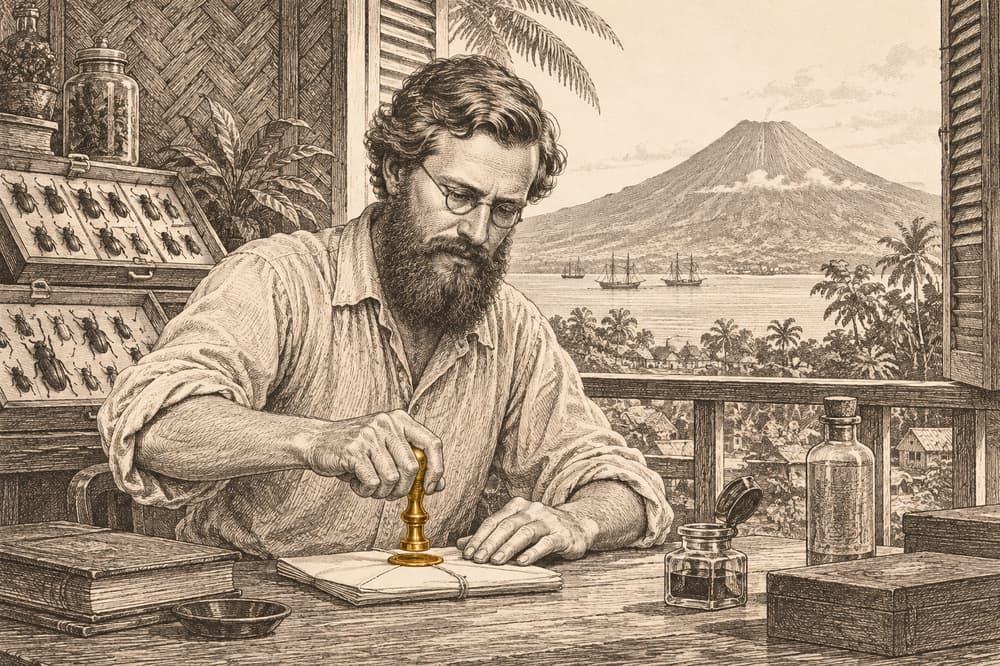
Early in 1858, 35-year-old field collector Alfred Russel Wallace lay sweating through a malarial fever in a palm-thatched house on the island of Ternate in the Maluku Archipelago.
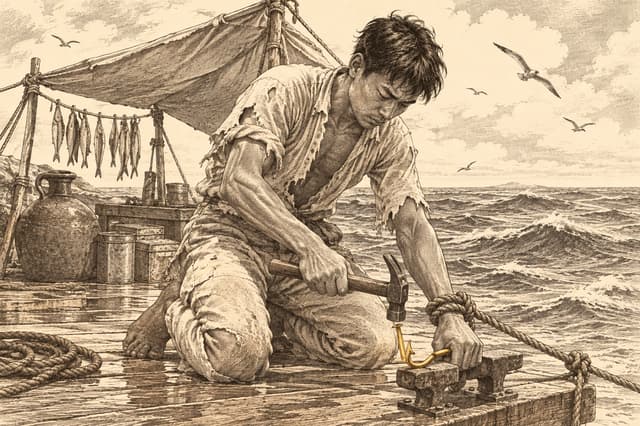
Six years earlier, an Atlantic ship fire had destroyed almost every specimen from 4 years of Amazon fieldwork, leaving him bobbing in an open boat for 10 days before starting over broke in Southeast Asia, paying his way by shipping crates of beetles and bird skins back to London.
Between fever chills on Ternate, the mechanism driving species change clicked into place. Over the next evenings, Wallace wrote out a crisp paper titled "On the Tendency of Varieties to Depart Indefinitely from the Original Type."
Sending that manuscript straight to a London journal would have handed an outsider sole first-in-print credit for natural selection.
Instead, Wallace sealed the packet and mailed it directly to Charles Darwin in England, asking the one established naturalist working the exact same problem to test his argument and pass it along if it held water.
Staring at 20 years of his own unpublished notebooks mirrored in a packet from the Spice Islands, Darwin placed his drafts and Wallace's Ternate essay in the hands of Charles Lyell and Joseph Hooker, who presented both together at the Linnean Society of London and published them side by side on August 20, 1858. Wallace learned about the joint reading months later in the islands and never wasted a day feuding with Darwin over top billing.
Insecure creators hide half-finished ideas under lock and key, terrified a bigger name will take their credit.
Wallace lost years of specimens at sea, worked out natural selection between malarial chills on a remote island, mailed his best discovery straight to his sharpest rival, pushed 20 years of private notes into daylight without an ounce of bitterness.
Share your strongest work to the toughest mind capable of testing it, and care more that the work advances than whose name prints first.